
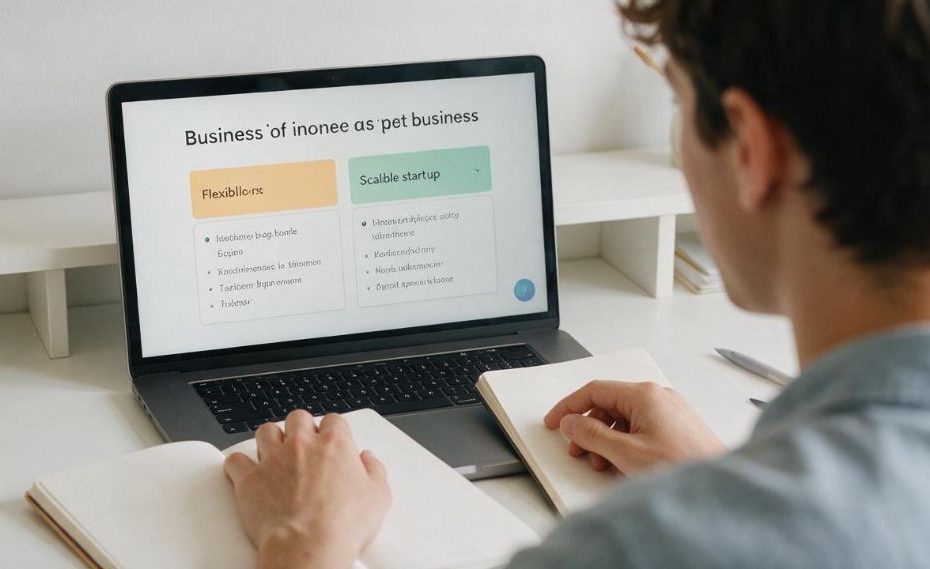
Choose a side hustle when you need flexible income and a low-cost way to test your skills; choose a startup when you have evidence of recurring demand and a business model that can grow beyond your own hours. Your side hustle vs startup decision should follow your goals, available time, financial downside, and customer proof, not the label that sounds more ambitious.
College gives you access to potential customers, collaborators, mentors, and campus resources, but your academic schedule creates firm limits. This guide helps you compare your options, test an idea without overspending, and decide when a small income stream deserves a larger commitment.
Why The Side Hustle Vs Startup Decision Feels So Hard In College
You’re choosing between several worthwhile goals at once. You may want income for tuition or living expenses, experience for your resume, control over your schedule, and a chance to build something of your own. A single project rarely delivers all of those benefits immediately. Deciding what matters most right now makes the choice easier.
Outside pressure can distort the decision. Social media may make launching a company look like the expected path for an ambitious student, and peers may treat a familiar service business as less serious. Yet a profitable tutoring operation or freelance practice can teach you pricing, sales, customer service, and recordkeeping without placing your semester at risk.
Your choice also doesn’t need to be permanent. A side hustle can remain a flexible source of cash, or it can expose a recurring customer problem that supports a startup. You’re choosing the right starting point, not making an irreversible career decision.
The Core Difference: Cash Flow Vs Scalable Uncertainty
A side hustle usually prioritizes near-term income, manageable costs, and personal control. You often sell your existing time or skill through tutoring, editing, design, consulting, repairs, or another defined service. If exams become demanding, you can reduce your client load or pause the work.
A startup tests whether a product or service can reach many customers through a repeatable business model. Early revenue may be inconsistent because you’re still studying the customer, offer, pricing, and sales process. The business may require software, systems, partners, or workers to grow beyond your direct labor.
The distinction depends more on the operating model than the industry. A student who designs websites for three local businesses is running a service-based side hustle. A student who turns a repeated website problem into a standardized product sold to hundreds of businesses is moving toward a startup model.
Start With Your Goal: Income, Skills, Experience, Or Scale?
If you need income during the current semester, prioritize an offer that customers already understand. You can sell a defined service, charge a straightforward price, and receive payment without building a large audience first. Freelancing, tutoring, and campus services often fit this goal because the path from work to payment is direct.
If your main goal is skill development, choose work that forces you to practice a valuable ability. A marketing student could manage campaigns for a local organization, and a computer science student could build simple tools for small clients. You’ll gain stronger evidence of your ability when real customers set expectations and pay for the result.
If you want to build a scalable venture, focus on a recurring problem shared by a reachable customer group. You’ll need customer discovery, testing, product development, and a repeatable way to attract buyers. That path can offer greater growth potential, but it usually demands more time before the business produces dependable income.
Audit Your Real Constraints: Time, Money, Energy, And Risk
Begin with your weekly schedule rather than an idealized plan. Block classes, studying, commuting, campus responsibilities, paid work, meals, exercise, and rest. The hours left after those commitments represent your actual business capacity. If the idea requires daily attention and you only have one open afternoon, the operating model doesn’t fit your semester.
Review your financial downside before spending. Add software, equipment, inventory, advertising, payment fees, registration costs, and professional services to your estimate. Set a loss limit you can absorb without using tuition money, missing rent, or depending on uncertain sales. A business idea becomes harder to evaluate when financial pressure forces you to accept poor terms or rush decisions.
Energy matters as much as time. Ten available hours spread across late nights may not support work that requires careful thinking or frequent customer calls. Choose a model that matches when you can work, how quickly customers expect replies, and whether another person can cover urgent tasks during exams.
Validate Demand Before You Commit
Validation means collecting evidence that a defined customer will act, not simply asking friends whether they like your idea. Start by speaking with people who experience the problem you want to solve. Ask what they do now, what the problem costs them, how often it occurs, and whether they’ve paid for another solution. Avoid spending most of the conversation pitching.
Build the smallest test that requires a meaningful customer action. That could be a paid pilot, a service delivered manually, a preorder, or a basic landing page with a clear offer. A minimum viable product (MVP) should test your riskiest assumption without requiring the finished product.
Measure behavior rather than compliments. Track how many qualified people respond, request details, agree to a meeting, pay, return, or refer someone else. The United States Small Business Administration (SBA) recommends using market research to assess demand, customer location, market size, competing options, and current pricing. These findings help you decide whether to continue, revise the offer, or stop before the costs rise.
Side Hustle Paths That Build Startup Skills
Freelancing teaches you how to find customers, define project scope, set prices, negotiate terms, and manage deadlines. Those skills transfer directly to building a larger company. You also hear customers describe their problems in their own words, which can reveal opportunities for standardized services or products.
Tutoring and coaching help you practice customer discovery and product design. Repeated questions may lead you to create a group program, digital resource, scheduling tool, or course support service. The important signal isn’t that the work feels repetitive. It’s that several paying customers want a similar outcome and can be served through a repeatable process.
A campus service can also serve as a controlled test market. Students and nearby organizations may need event support, design work, moving help, technical setup, photography, or administrative assistance. Keep the initial offer narrow so you can compare demand, delivery time, costs, and customer satisfaction without managing too many services.
When A Side Hustle Should Become A Startup
Consider expanding when demand repeatedly exceeds the amount of work you can personally deliver. A full calendar alone isn’t enough. Look for customers who share the same problem, accept similar pricing, and can be served through a standard process. Consistency is stronger evidence than one unusually profitable month.
The shift also makes sense when revenue can become less dependent on your hours. You may be able to build software, license a process, train other workers, sell a standardized package, or develop recurring subscriptions. The new model should improve capacity or repeatability, not merely add more work and expenses.
Before expanding, document how customers find you, why they buy, what delivery costs, and how long each sale takes. Review whether the numbers still work after accounting for tools, support, marketing, contractors, and refunds. If the model only works when your labor is treated as free, it isn’t ready to scale.
Legal, Tax, And Campus Rules To Check
Running a small operation doesn’t remove your tax or recordkeeping duties. The Internal Revenue Service (IRS) says self-employed people generally file an annual income tax return and may need to make estimated tax payments during the year. The federal self-employment tax rate is 15.3 percent, covering Social Security and Medicare taxes, though your full tax position depends on your income, expenses, filing status, and other factors.
Keep business income and expenses organized from the beginning. Save receipts, invoices, contracts, payment records, and mileage details when relevant. The IRS reviews factors including profit intent, businesslike records, time and effort, expertise, and earnings history when distinguishing a business from a hobby. A qualified tax professional can help you understand how these rules apply to you.
Your location and activity can affect registration, permits, insurance, zoning, and business structure. A sole proprietorship may be simpler to begin, and a Limited Liability Company (LLC) may provide different legal and administrative features, but registration alone doesn’t solve every liability or tax concern. Check your state and local requirements, campus selling policies, housing rules, and intellectual property policies before operating.
If you’re an international student, speak with your designated school official and a qualified immigration attorney before performing paid work or starting a business. Work authorization rules can depend on your status, the activity, and how you participate. Don’t rely on another student’s experience as legal guidance.
A Simple Decision Model For Students
Use four filters: your immediate goal, weekly capacity, affordable downside, and proof of demand. If you need income soon, have limited time, and haven’t confirmed broader demand, start with a side hustle. If customers repeatedly pay for the same outcome and the work can grow beyond your personal hours, test a startup model.
- Choose a side hustle when flexibility, quick income, low costs, and easy pauses matter most.
- Choose a startup when you’ve found repeat demand and want to build a scalable, repeatable business.
- Run a limited test when demand is uncertain but the idea can be tested cheaply.
- Wait when the project would threaten tuition, housing, health, or academic progress.
Set a review point rather than allowing the project to expand without limits. You could assess customer demand, profit, workload, and academic impact after a defined number of sales or several weeks of testing. Continue when the evidence supports the effort, adjust when customers show interest but resist the offer, and stop when the project consumes resources without producing useful proof.
Common Mistakes And Practical Steps
One common mistake is building before talking to customers. Students can spend months creating an application, store, or brand without confirming that anyone will pay. Begin with customer conversations and a small paid test. Branding can wait until the offer solves a problem people recognize.
Another mistake is confusing revenue with profit. A project can generate sales and still lose money after supplies, platform fees, advertising, refunds, and your time are counted. Track revenue, direct costs, operating expenses, hours worked, and cash available. This record also helps you compare the business with an internship, campus job, or freelance contract.
Don’t raise outside money simply because startup stories make funding sound like the normal first step. Bootstrapping with customer revenue can preserve control and force you to test whether the offer works. If you later seek funding, you’ll have stronger material when you can show customer demand, retention, pricing, and a believable use for the capital.
Use the support already around you. Campus entrepreneurship centers, professors, alumni, incubators, and local business groups may offer mentoring, workspace, pitch feedback, or legal clinics. SCORE also provides free business mentoring and educational resources. A mentor can challenge assumptions without making the decision for you.
What Is The Difference Between A Side Hustle And A Startup?
- Side hustle: flexible income, lower cost, easier to pause.
- Startup: repeatable model built for growth.
- Choose using your time, risk, capital, goals, and customer proof.
Choose The Smallest Move That Produces Real Evidence
The right college business path is the one that matches your current goal and produces useful evidence without exposing you to avoidable loss. A side hustle can generate income, sharpen your skills, and teach you what customers value. A startup deserves greater commitment once demand repeats, the model can grow beyond your hours, and your schedule can support the work. Treat the side hustle vs startup choice as a staged decision: start small, measure customer behavior, protect your academic capacity, and expand only when the numbers and workload support it.
References
- United States Small Business Administration: Steps to Start a Business
- United States Small Business Administration: Market Research and Competitive Analysis
- United States Small Business Administration: Write Your Business Plan
- United States Small Business Administration: Choose a Business Structure
- Internal Revenue Service: Self-Employed Individuals Tax Center
- Internal Revenue Service: Self-Employment Tax
- Internal Revenue Service: Hobby or Business
- SCORE: Business Mentoring and Educational Resources.

Olivier Gillier is a global investment strategist and co-founder of RioBlanco Capital LLC, with over 20 years of experience in wealth management and international markets. A former Senior Vice President at Merrill Lynch, he now focuses on private equity, cross-border finance, and philanthropic initiatives worldwide.